Reviews
3D Logic Room Explorer offers a refreshing take on the escape room genre. Each room is a visual treat, with warm colors and cleverly hidden clues that encourage thorough exploration. The controls are intuitive, and the lack of time pressure makes it ideal for players who prefer thoughtful problem-solving over speed. While the difficulty ramps up gradually, the game never feels frustrating. It is a solid choice for families or anyone seeking a low-stress puzzle experience.
Description
Room-by-Room Puzzle Design
Each room in this game functions as a self-contained puzzle environment. Players enter a space filled with furniture, decorations, and interactive objects. The goal is to examine everything carefully, noting any items that seem out of place or useful. Some puzzles require combining objects found in different parts of the room, while others rely on noticing patterns or hidden compartments. The isometric camera angle gives a clear overview, but details may be tucked behind larger objects or in shadowed corners. This design encourages methodical exploration rather than random clicking.
Observation as a Core Skill
Success depends on how well you notice small details. A key might be resting on a shelf, a note could be tucked under a rug, or a mechanism might activate only after a specific sequence of actions. The game rewards players who take time to look at each object from multiple angles. Rotating the view is essential, as some clues are only visible from certain perspectives. This focus on observation makes each room feel like a real space to investigate, not just a series of puzzles.
Visual Style and Atmosphere
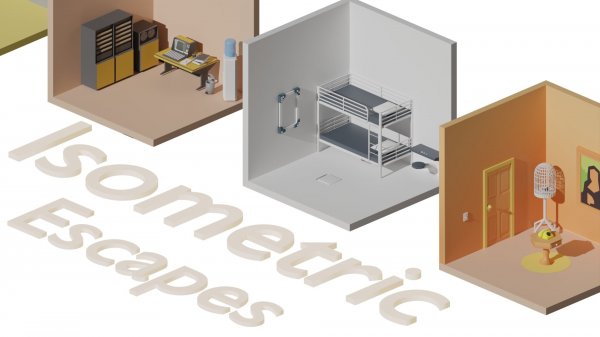
The 3D isometric perspective gives each room a clean, toy-like appearance. Colors are warm and inviting, with soft lighting that avoids harsh contrasts. Furniture and props are stylized but recognizable, making it easy to identify what might be interactive. The visual design supports the relaxed tone, creating an environment where players can focus without distraction. Background music or ambient sounds, if present, are subtle and non-intrusive, helping maintain a calm pace.
Controls and Accessibility
Interaction is handled entirely through mouse or touch input. Dragging rotates the camera around the room, while clicking on objects selects or activates them. An inventory system stores collected items, and players can combine items by dragging one onto another. The interface is minimal, with no cluttered menus or complicated controls. This simplicity makes the game accessible to younger players or those new to puzzle games, while still offering enough depth for experienced solvers.
Pacing and Progression
There are no timers or score counters. Players advance at their own speed, moving to the next room only after solving the current challenge. This structure suits short play sessions, as each room can be completed in a few minutes, but also allows for longer, more immersive play. The difficulty curve appears to increase gradually, with early rooms introducing basic mechanics and later rooms requiring more complex logic or multi-step solutions. The lack of pressure means players can step away and return later without penalty.








03 Comments
Sign in to comment
You must be logged in before posting a review or rating.
No account? Create one
No comments yet. Be the first to comment!